
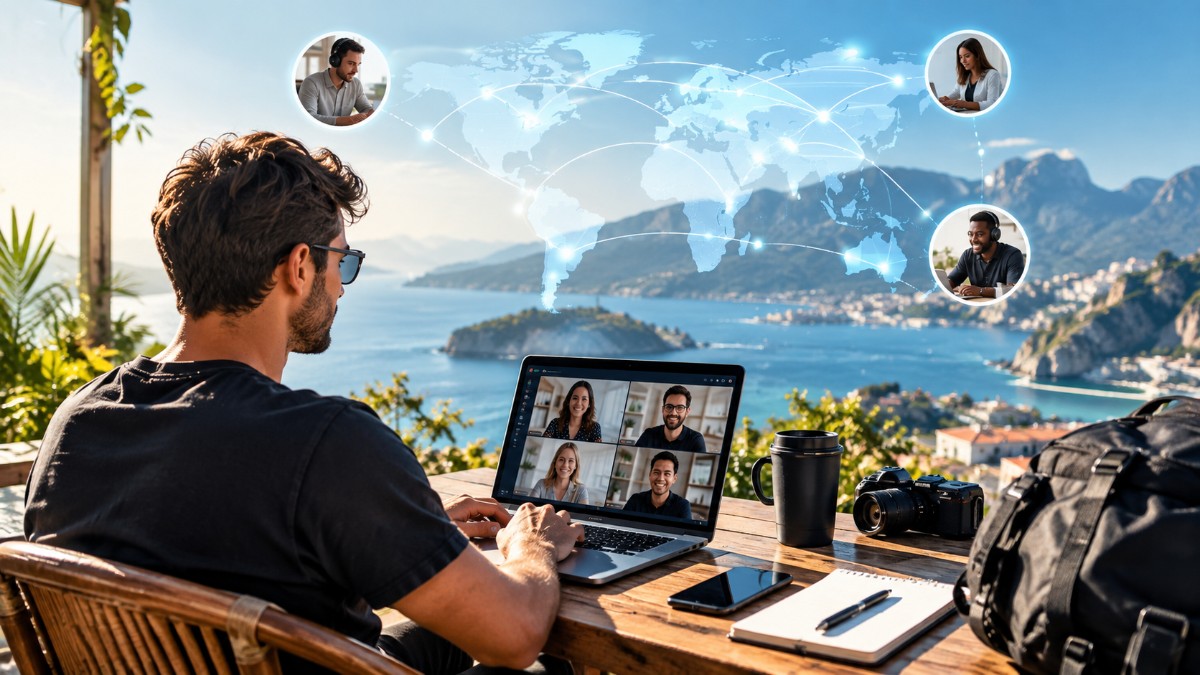
The traditional image of entrepreneurship often involves office buildings, large teams, and physical business locations. However, technology has dramatically changed the way companies are built and operated. Today, entrepreneurs can launch, manage, and scale businesses from virtually anywhere in the world.
This shift has given rise to a new generation of founders embracing online entrepreneurship and building highly successful location independent businesses. Whether working from a home office, a co-working space, or while traveling internationally, entrepreneurs now have more freedom and flexibility than ever before.
As digital tools continue to evolve, remote entrepreneurship is becoming one of the most powerful trends shaping the future of business.
What Is Remote Entrepreneurship?
Remote entrepreneurship refers to building and operating a business without being tied to a specific physical location.
Unlike traditional companies that depend on offices and local employees, remote businesses often use:
- Cloud-based software
- Remote teams
- Digital communication tools
- Online marketing
- Virtual collaboration platforms
This allows entrepreneurs to access global talent, serve international customers, and reduce many of the costs associated with traditional business operations.
As a result, more founders are choosing remote-first business models from the very beginning.
Why Online Entrepreneurship Is Growing
Several factors have contributed to the rise of online entrepreneurship.
The internet has made it possible for businesses to reach customers worldwide without requiring physical storefronts.
At the same time, advances in technology have simplified:
- Communication
- Project management
- Payment processing
- Customer support
- Content creation
- Digital marketing
These developments have lowered barriers to entry and created opportunities for entrepreneurs to compete globally regardless of their location.
For many founders, geographic limitations are no longer a major obstacle to growth.
The Rise of Location Independent Businesses
A location independent business allows founders to operate from anywhere while serving customers around the world.
Examples include:
- Digital marketing agencies
- Online education platforms
- Software companies
- E-commerce brands
- Consulting businesses
- Content creation businesses
Because these companies rely heavily on digital infrastructure, entrepreneurs can focus on growth without being restricted by geography.
This flexibility has become especially appealing to founders who value freedom, mobility, and work-life balance.
How Technology Enables Global Companies
Modern entrepreneurs have access to tools that previous generations could only imagine.
Today’s founders can:
- Hire remote employees internationally
- Conduct meetings through video conferencing
- Manage projects online
- Automate repetitive tasks
- Sell products globally
- Build audiences through social media
These technologies allow even small businesses to operate on a global scale.
A founder working from a laptop can now compete with companies that once required significant resources and infrastructure.
This technological advantage is one of the primary reasons remote entrepreneurship continues to grow.
Iman Gadzhi and the Digital Business Model
Entrepreneur Iman Gadzhi is a well-known example of how online businesses can scale globally.
He built a successful digital marketing and education business by leveraging the internet rather than relying on traditional business structures.
Through content creation, online education, and digital services, Gadzhi demonstrated how entrepreneurs can reach international audiences and create scalable revenue streams from virtually anywhere.
His success highlights the growing opportunities available to entrepreneurs willing to embrace digital-first business models.
Read our profile Iman Gadzhi.
Shaan Puri and Opportunity in the Digital Economy
Another entrepreneur who represents the future of remote entrepreneurship is Shaan Puri.
Through startups, investing, media ventures, and content creation, Puri has shown how modern entrepreneurs can build influence and business opportunities online.
His work with the My First Million podcast has helped thousands of aspiring founders discover innovative business ideas and emerging market trends.
Puri frequently emphasizes opportunity recognition, digital leverage, and scalable business models—all key components of successful remote entrepreneurship.
Read our profile Shaan Puri.
Best Remote Business Ideas for Entrepreneurs
Entrepreneurs interested in building location independent companies have numerous opportunities available.
Popular remote business ideas include:
Digital Marketing Agencies
Businesses worldwide need help with advertising, SEO, content marketing, and social media management.
Online Education
Courses, coaching programs, and membership communities continue to grow rapidly.
Software and SaaS Businesses
Software products can serve customers globally while generating recurring revenue.
E-Commerce Brands
Online stores can reach international audiences without requiring physical retail locations.
Content-Based Businesses
Blogs, podcasts, newsletters, and YouTube channels can become valuable digital assets over time.
These business models offer scalability and flexibility while reducing geographic limitations.
Challenges of Remote Entrepreneurship
Although remote entrepreneurship offers many advantages, it also presents challenges.
Common obstacles include:
- Managing remote teams
- Maintaining communication
- Building company culture
- Staying productive
- Navigating time zone differences
Successful entrepreneurs overcome these challenges by implementing strong systems, clear processes, and effective communication practices.
The Future of Entrepreneurship Is Global
As technology continues advancing, the distinction between local and global businesses will continue to shrink.
Founders no longer need expensive offices, large staffs, or physical infrastructure to compete in the marketplace.
Instead, success increasingly depends on:
- Creativity
- Execution
- Digital skills
- Adaptability
- Customer value
Entrepreneurs who embrace these trends will be better positioned to capitalize on future opportunities.
Conclusion
The future of online entrepreneurship is brighter than ever. Thanks to technology, entrepreneurs can now build location independent businesses, access global markets, and create scalable companies from virtually anywhere in the world.
Founders like Iman Gadzhi and Shaan Puri demonstrate how digital-first business models can unlock extraordinary opportunities. As remote work and digital collaboration continue to evolve, entrepreneurs who embrace flexibility and innovation will have a significant advantage in the years ahead.
For more entrepreneur profiles, startup strategies, and business growth insights, explore our latest blogs.